
Guide & References
Here you will find information on the principles underlying Genovalia's activities. This information is presented in the form of guides and references. Don't hesitate to consult this section to learn more about data sharing. We also discuss artificial intelligence, more specifically machine learning and its applications.

They define the best practices and standards that enable data reuse. The acronym stands for:
F – Findable: Data should be easy to locate for both humans and machines, through detailed metadata and unique as well as persistant identifiers.
A – Accessible: Data should be retrievable using standardized protocols, with clear conditions for access when necessary
I – Interoperable: Data can be integrated with other datasets and systems using shared standards and vocabularies
R – Reusable: Data are well-documented, reliable, and licensed so they can be confidently reused in new contexts
Data structuring involves organizing data into a systematic format, such as tables, fields, or databases, so that it can be efficiently stored, accessed, and analyzed. In the case of datasets, the main structure is the schema, which primarily describes the variables and their units. A well-documented schema allows secondary users to better understand the data and avoid misinterpretation. Data structuring is of critical importance when it comes to making datasets public and sharing them.
Data standardization refers to the use of consistent formats, definitions, and vocabularies to organize and describe data, making them easier to interpret, share, and reuse.
That usually means using:
- consistent variable names
- standardized formats and units
- clear metadata
- controlled vocabularies or ontologies
- consistent coding rules (e.g. missing values)
Metadata is basically 'data about data' that provides contextual information describing and explaining the content of a dataset, therefore facilitating its discovery, understanding and reuse. We distinguish two types of metadata for our purpose: 1. descriptive / administrative metadata, and 2. structural metadata.
- Descriptive metadata aims to answer the question: What is the data about? It includes information such as the dataset title, authors, associated keywords, and spatial or temporal information (e.g., where and when the data were collected). Administrative metadata includes information on who created the dataset, who owns it, whether access restrictions apply, or its version history. This information is summarized in a machine-readable DCAT format to enhance discoverability.
- Structural metadata documents how data are organized. It is primarily represented through a data schema, namely a machine-readable description of a dataset that specifies its variables, labels, data types, units, permissible values, and any other characteristics required for its interpretation and reuse. In the context of a genomic dataset, structural metadata may include detailed information on genotyped or sequenced individuals, such as genus and species, sampling sites and collection dates, methodological details, phenotypes, and other relevant attributes. Whenever possible, controlled vocabularies or ontology terms should be used.
Semantics refers to the meaning of data elements or terms within a dataset, including variables, values, and their interpretation. Clear semantics greatly improve findability and interoperability by reducing ambiguity and ensuring the consistent use of terms across datasets.
A first step toward improving semantics is the use of controlled vocabularies. A controlled vocabulary consists of a predefined list of accepted terms used to ensure consistency in naming and annotation. Although valuable, it typically provides little or no formal representation of relationships among terms beyond simple hierarchies.
An ontology goes further by formally defining each term or concept and explicitly specifying the relationships among them in a machine-readable way. As such, ontologies provide a more comprehensive and structured description of a dataset. However, ontologies may also introduce redundancy (i.e., multiple ontologies can be used to describe the same concept), making consistency in the selection and use of ontology resources essential.
A data schema is a structured, machine-readable description of a dataset that defines its variables and how they should be interpreted. A data schema captures not only the names of variables but also their definitions, data types, units, permissible values, and associated metadata, ensuring that each element of the dataset has a precise and unambiguous meaning. By linking variables to standardized ontology or controlled vocabulary terms, the schema provides semantic clarity and promotes consistency across datasets. This structured representation enables automated validation, integration, and transformation of data, therfore facilitating interoperability between systems. Ultimately, the use of well-documented data schemas supports reproducibility and enhances data quality, thus promoting findability, accessibility, interoperability, and reusability of research data.
Data Management Plans (DMPs) are living documents that outline how research data will be collected, organized, stored, shared and preserved throughout a project. They can evolve over time and should be adapted to the scope and needs of each project, including considerations for Indigenous data sovereignty where applicable.
DMPs are increasingly required by funders and support research excellence by improving planning, reducing risks, and enhancing data quality and usability. They also help streamline ethics approval and facilitate collaboration.
A typical DMP addresses key aspects of data management, including data collection, documentation and metadata, storage and backup, long-term preservation, sharing and reuse, roles and responsibilities, and ethical and legal compliance.
Genovalia can assist in developing customized DMPs and ensuring that data remain accessible, secure, and reusable.
In Canada, there are two main federated repositories. The first is Borealis, also known as the Canadian Dataverse. The second is the Federated Research Data Repository (FRDR), which is overseen by the Digital Research Alliance of Canada.
By supporting researchers in depositing their data in these two major Canadian repositories, Genovalia helps give a second life to research data. In parallel, we also encourage researchers to deposit their datasets on our own platform (accessible at: https://sedna.apps.genovalia.ulaval.ca/en/catalogue), where we apply higher standards of data structuring and standardization to further facilitate data reuse and exploration by both the data owners and the broader scientific community.
Genovalia uses two types of infrastructure to store data. The first is Lustre storage, which is primarily used when computational processing needs to be performed on the data.
The second is Ceph S3-type storage.
contenu de la section apprentissage automatisé
Bento is a free and open-source microservices platform for data management and visualization, developed by the Canadian Centre for Computational Genomics (C3G) in Montreal (McGill University). Relying on reusable and interoperable components, such as standardized APIs, Bento fosters interactions among worldwide omics research communities while reducing the complexity and costs associated with deploying data dissemination portals. Bento is thus an integral part of the Global Alliance for Genomics and Health (GA4GH), and its development team actively contributes to the management of data for the Pan-Canadian Genome Library project.
The emergence of the “One Health” concept offers a unique opportunity to align Genovalia’s data catalogue, which focuses on non-human data, with that of Bento, dedicated to clinical and omics data in human health. The adoption of compatible formats for describing projects and datasets will facilitate information discovery and access across both catalogues. This harmonization effort is part of a broader initiative to establish a federation of interoperable data centers.
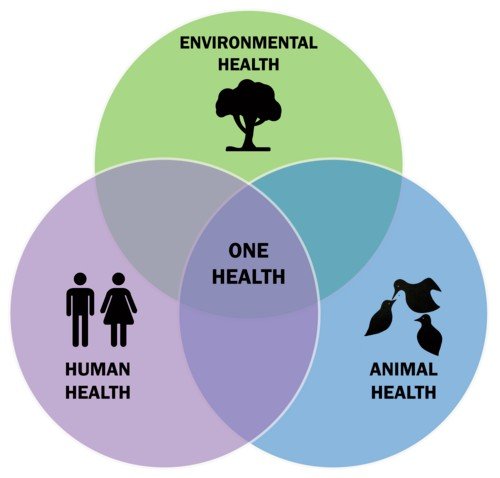
Ratnadass, Alain; Deguine, Jean-Philippe (June 2021). "Crop protection practices and viral zoonotic risks within a One Health framework". Science of the Total Environment. 774 145172. Bibcode:2021ScTEn.77445172R. doi:10.1016/j.scitotenv.2021.145172. ISSN 0048-9697. PMID 33610983. S2CID 231989807