
Informations supplémentaires
Here you'll find more information on the main objectives of the Genovalia platform, as well as links to websites offering documentation.

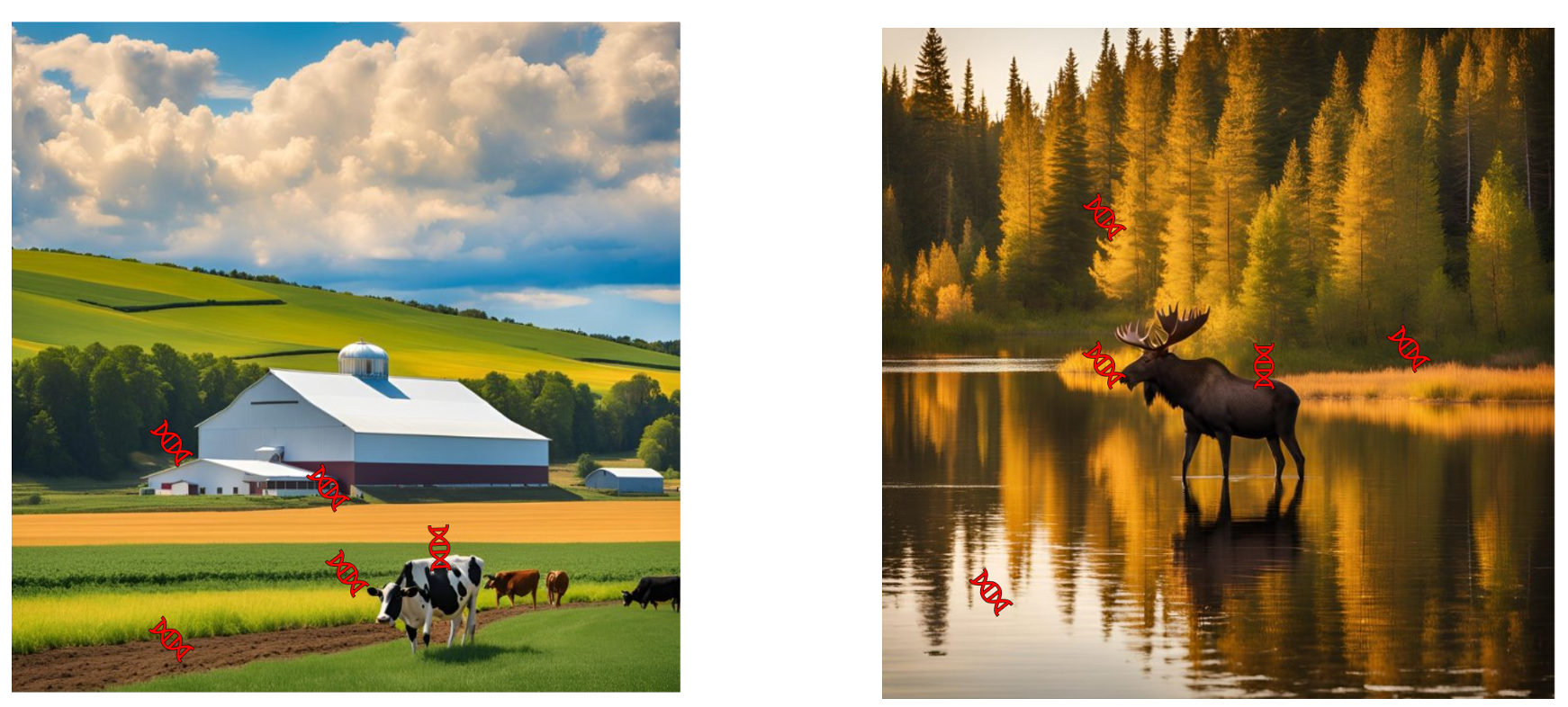
DNA is everywhere there is life. Since researchers have had access to molecular biology methods enabling them to reveal this molecule and quantify differences (mutations) in order to better understand how living beings function, the amount of genetic and genomic information has grown exponentially.
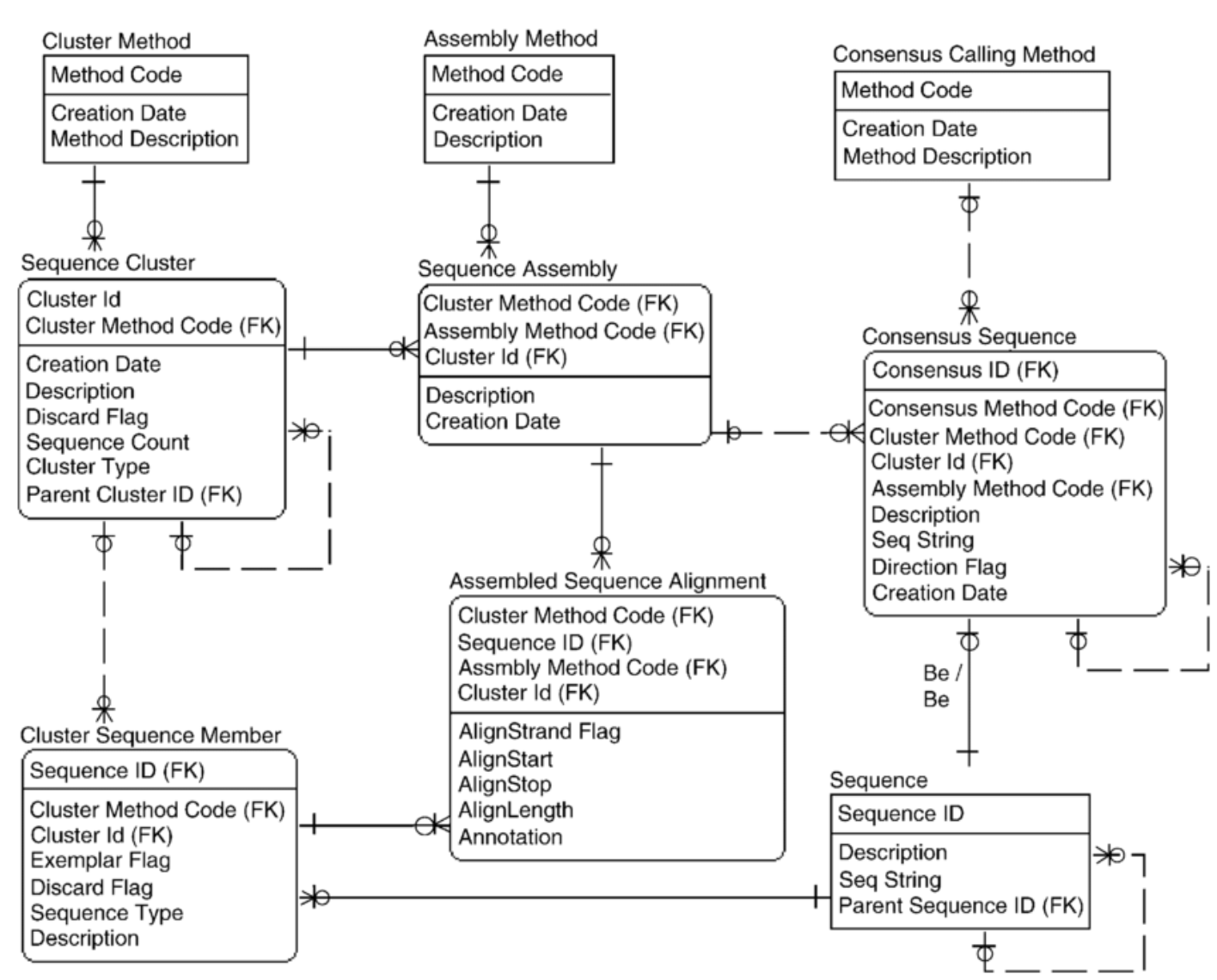
At Genovalia, we have developed a range of services that enable researchers to organize and structure their data. We can create the schemas for your datasets, store them as active data in our Data Explorer (service coming soon), develop a web-accessible relational database, and deposit the data in a federated repository such as Borealis or the Federated Research Data Repository (FRDR).
Our mission is to give a second life to data obtained for research. This first life, in fact, has enabled the data to take shape through the scientific approach of the researchers. Once the results of the analyses have been published in a scientific journal, the original data are stored on hard disks and remain inaccessible.
For most of the research data collected to date, the life cycle could be summed up in this image:
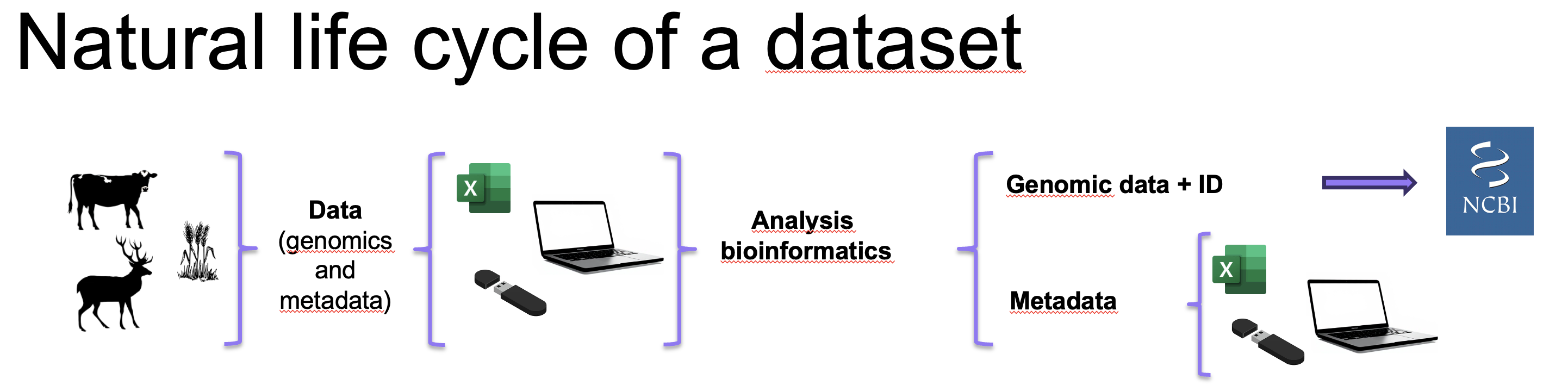
Genomic data are stored in large databases such as NCBI, but the other associated data used to describe the samples (morphology, habitat, physiology, etc.) and those describing the data, the metadata, are generally not published.
Our aim is to make this data available to as many people and organizations as possible. This is the F of the FAIR principles: Easily Findable, Accessible, Interoperable, Reusable.
The desired data life cycle could be as follows:
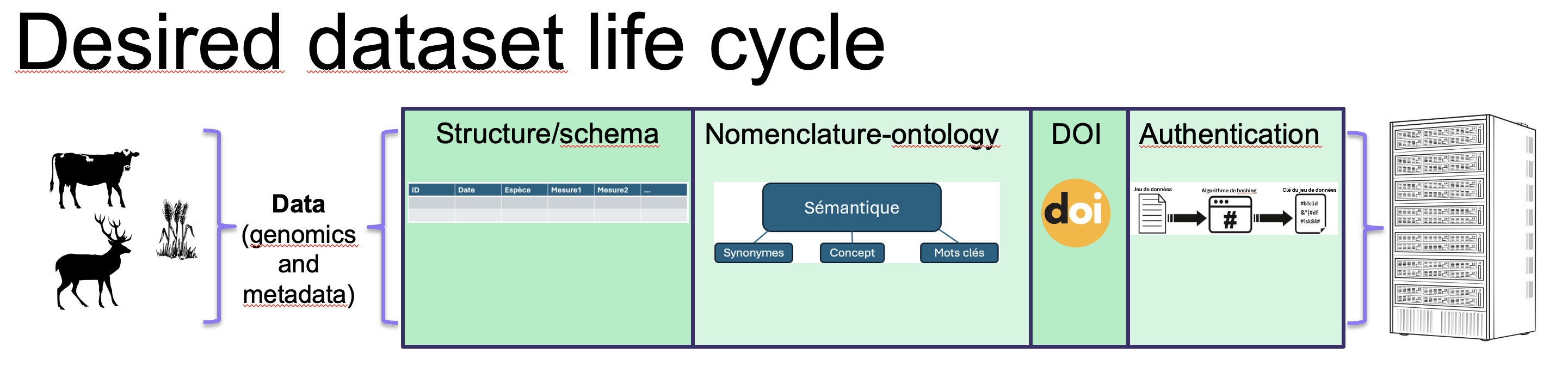
A schema is created to describe the attributes of this data as faithfully as possible in order to eliminate errors. Semantics are also used to link the descriptions to ontologies, enabling a secondary user to be certain what the variables used refer to.
At the same time, we are developing a protocol for sound data governance, i.e. respecting data ownership and the researchers' wish to choose with whom they wish to share it. We have therefore developed a legal framework with agreements signed by all parties for the storage and reuse of datasets.
In order to describe the conditions, both physical and immaterial, for storing data in the catalog, we have written a management framework.
The Genovalia dataset catalog is one of the services we make available to the public. All interested parties are welcome to access it, as long as permissions allow. In fact, a dataset can be completely open and downloadable, or closed and only the data schema shows its structure. Access is possible as long as the data owner grants access rights. Both parties are then bound by a data-sharing agreement, according to the conditions defined by the owner.